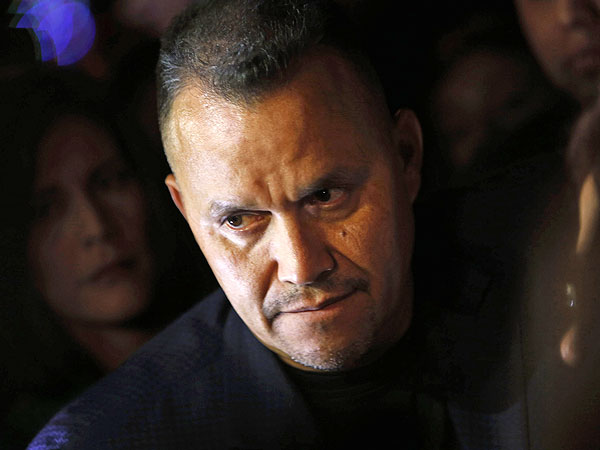
DA investigating Texas' troubled $3B cancer agency


AUSTIN, Texas (AP) — Turmoil surrounding an unprecedented $3 billion cancer-fighting effort in Texas worsened Tuesday when its executive director offered his resignation and the state's chief public corruption prosecutor announced an investigation into the beleaguered agency.


No specific criminal allegations are driving the latest probe into the Cancer Prevention and Research Institute of Texas, said Gregg Cox, director of the Travis County district attorney's public integrity unit. But his influential office opened a case only weeks after the embattled agency disclosed that an $11 million grant to a private company bypassed review.


That award is the latest trouble in a tumultuous year for CPRIT, which controls the nation's second-largest pot of cancer research dollars. Amid the mounting problems, the agency announced Tuesday that Executive Director Bill Gimson had submitted his letter of resignation.


"Unfortunately, I have also been placed in a situation where I feel I can no longer be effective," Gimson wrote in a letter dated Monday.


Gimson said the troubles have resulted in "wasted efforts expended in low value activities" at the agency, instead of a focused fight against cancer. Gimson offered to stay on until January, and the agency's board must still approve his request to step down.


His departure would complete a remarkable house-cleaning at CPRIT in a span of just eight months. It began in May, when Dr. Alfred Gilman resigned as chief science officer in protest over a different grant that the Nobel laureate wanted approved by a panel of scientists. He warned it would be "the bomb that destroys CPRIT."


Gilman was followed by Chief Commercialization Officer Jerry Cobbs, whose resignation in November came after an internal audit showed Cobbs included an $11 million proposal in a funding slate without a required outside review of the project's merits. The lucrative grant was given to Dallas-based Peloton Therapeutics, a biomedical startup.


Gimson chalked up Peloton's award to an honest mistake and has said that, to his knowledge, no one associated with CPRIT stood to benefit financially from the company receiving the taxpayer funds. That hasn't satisfied some members of the agency's governing board, who called last week for more assurances that no one personally profited.


Cox said he has been following the agency's problems and his office received a number of concerned phone calls. His department in Austin is charged with prosecuting crimes related to government officials; his most famous cases include winning a conviction against former U.S. House Majority Leader Tom DeLay in 2010 on money laundering charges.


"We have to gather the facts and figure what, if any, crime occurred so that (the investigation) can be focused more," Cox said.


Gimson's resignation letter was dated the same day the Texas attorney general's office also announced its investigation of the agency. Cox said his department would work cooperatively with state investigators, but he made clear the probes would be separate.


Peloton's award marks the second time this year that a lucrative taxpayer-funded grant authorized by CPRIT instigated backlash and raised questions about oversight. The first involved the $20 million grant to M.D. Anderson Cancer Center in Houston that Gilman described as a thin proposal that should have first been scrutinized by an outside panel of scientific peer-reviewers, even though none was required under the agency's rules.


Dozens of the nation's top scientists agreed. They resigned en masse from the agency's peer-review panels along with Gilman. Some accused the agency of "hucksterism" and charting a politically-driven path that was putting commercial product-development above science.


The latest shake-up at CPRIT caught Gilman's successor off-guard. Dr. Margaret Kripke, who was introduced to reporters Tuesday, acknowledged that she wasn't even sure who she would be answering to now that Gimson was stepping down. She said that although she wasn't with the agency when her predecessor announced his resignation, she was aware of the concerns and allegations.


"I don't think people would resign frivolously, so there must be some substance to those concerns," Kripke said.


Kripke also acknowledged the challenge of restocking the peer-review panels after the agency's credibility was so publicly smeared by some of the country's top scientists. She said she took the job because she felt the agency's mission and potential was too important to lose.


Only the National Institutes of Health doles out more cancer research dollars than CPRIT, which has awarded more than $700 million so far.


Gov. Rick Perry told reporters in Houston on Tuesday that he wasn't previously aware of the resignation but said Gimson's decision to step down was his own.


Joining the mounting criticism of CPRIT is the woman credited with brainstorming the idea for the agency in the first place. Cathy Bonner, who served under former Texas Gov. Ann Richards, teamed with cancer survivor Lance Armstrong in selling Texas voters in 2007 on a constitutional amendment to create an unprecedented state-run effort to finance a war on disease.


Now Bonner says politics have sullied an agency that she said was built to fund research, not subsidize private companies.


"There appears to be a cover-up going on," Bonner said.


Peloton has declined comment about its award and has referred questions to CPRIT. The agency has said the company wasn't aware that its application was never scrutinized by an outside panel, as required under agency rules.


___


Follow Paul J. Weber on Twitter: www.twitter.com/pauljweber


Read More..

Brazen N.Y. killing of L.A. man leaves puzzling questions


NEW YORK — Brandon Woodard checked out of his midtown Manhattan hotel room Monday afternoon and emerged onto 58th Street a block from Columbus Circle.


As the 31-year-old Playa Vista man walked down the street, a man standing near a Lincoln sedan pulled a hood over his head as Woodard passed. A short time later, the two passed each other a second time. The man turned, pulled out a gun and shot Woodard at close range in the back of the head with a 9-millimeter pistol. He got back into the Lincoln, which pulled away.


The shooting has riveted New York and made for tabloid headlines. New York police have described the killing as an assassination-style attack.


But it has also reverberated in Los Angeles, where Woodard was raised and made his home.


Woodard grew up in Ladera Heights, played basketball at the exclusive Campbell Hall private high school in Studio City and graduated from Loyola Marymount University in 2003. His stepfather, Rod Wellington, said in an interview Tuesday that Woodard was pursuing a law degree at the University of West Los Angeles School of Law (school officials would not confirm if he was enrolled).


His stepfather described Woodard as a "loving son, a loving father and a loving brother." Woodard had a 4-year-old daughter and had a "great relationship" with the girl and her mother, he said.


"He was a good young man," Wellington said.


But court records revealed a more complex picture. Woodard has been arrested at least 20 times, according to New York Police Commissioner Raymond Kelly.


In 2004, Woodard was cited by Las Vegas police and summoned to court after a backstage scuffle with a security guard at an Usher concert at the Mandalay Bay Hotel and Casino. Police said Woodard had entered a restricted area and refused orders to leave.


He failed to appear in court in connection with the citation and a warrant was issued for his arrest. He was arrested in 2008 on that bench warrant but police could not immediately say how the matter was resolved.


Los Angeles authorities allege that in February 2008 he stole items from a Whole Foods Market and a Gelson's. He was sentenced to nine days in county jail and 200 hours of community service.


In December 2009, he pleaded no contest to a misdemeanor hit-and-run driving charge in Torrance. He received three years and a day in county jail.


Prosecutors said that he came back to court in 2010 and 2011 for probation violation hearings related to arrests for grand theft and battery against a former spouse as well as a spousal battery arrest in January. In April, prosecutors said his probation was completed.


The Los Angeles city attorney's office said there was a hearing related to the September 2010 spousal abuse allegation and noted that a bench warrant had been issued for Woodard's arrest as recently as July 3. It was not immediately clear how the warrant was resolved.


Officials with the Los Angeles County district attorney's office said Woodard was due in Beverly Hills Superior Court on Jan. 22 for a hearing in connection with a single charge of cocaine possession. He was originally charged in June.


Court records also indicated that Woodard's mother had been involved in multiple civil lawsuits related to her real estate business dealings. When Woodard was arrested in January, he listed his occupation as real estate.


Neither police nor family members said they have any idea for a motive.


On Tuesday, Kelly said detectives had made progress in their investigation from ballistics evidence and video surveillance footage that captured the shooting and the suspected getaway vehicle.


He added that investigators were pursuing all leads, including Woodard's criminal history and his family's real estate dealings.


Kelly said Woodard, who carried three cellphones, was believed to be a promoter of some kind, but did not elaborate.


It was not clear what brought Woodard to New York after he purchased a one-way ticket from California, Kelly said, or where he was going when he left the hotel. Woodard checked into the hotel Sunday and checked out about 1:15 p.m. the next day.


Kelly said it was clear the gunman lay in wait for Woodard and didn't act alone.


The suspect had a driver who, after the hit, pulled a silver or gray Lincoln onto 58th Street, Kelly said. Once the gunman was in the car, the vehicle headed south on 7th Avenue and disappeared. A short time later, a car "similar in description" was seen heading through the midtown tunnel eastbound into Queens, where the driver paid the toll with cash.


Investigators had the license plate of the vehicle, but Kelly declined to release the information, citing the ongoing investigation.


Kelly also said ballistics analysis linked the weapon to a 2009 shooting in Queens. The gun was fired at a residence, he said — no one was hurt and no arrests were made.


Kelly said Monday's crime was particularly surprising, given such a public setting.


"You can characterize it as either being brazen or foolhardy," he said.


tina.susman@latimes.comkate.mather@latimes.comandrew.blankstein@latimes.com

Times staff writers Adolfo Flores, Jeff Gottlieb and Frank Shyong contributed to this report. Susman reported from New York, Mather and Blankstein from Los Angeles.


Read More..

Allies of Egypt’s Morsi Beat Protesters Outside Palace


Tara Todras-Whitehill for The New York Times


Yehia Negm said he was in a group detained by Islamist supporters of President Mohamed Morsi. “It was torment for us,” he said.


CAIRO — Islamist supporters of President Mohamed Morsi captured, detained and beat dozens of his political opponents last week, holding them for hours with their hands bound on the pavement outside the presidential palace while pressuring them to confess that they had accepted money to use violence in protests against him.


“It was torment for us,” said Yehia Negm, 42, a former diplomat with a badly bruised face and rope marks on his wrists. He said he was among a group of about 50, including four minors, who were held on the pavement overnight. In front of cameras, “they accused me of being a traitor, or conspiring against the country, of being paid to carry weapons and set fires,” he said in an interview. “I thought I would die.”


The abuses, during a night of street fighting between Islamists and their opponents, have become clear through an accumulation of video and victim testimonies that are now hurting the credibility of Mr. Morsi and his allies as they push forward to this weekend’s referendum on an Islamist-backed draft constitution.


To critics of Islamists, the episode on Wednesday recalled the tactics of the ousted president, Hosni Mubarak, who often saw a conspiracy of “hidden hands” behind his domestic opposition and deployed plainclothes thugs acting outside the law to punish those who challenged him. The difference is that the current enforcers are driven by the self-righteousness of their religious ideology, rather than money.


It is impossible to know how much Mr. Morsi, a leader of the Muslim Brotherhood’s political arm, knew about the Islamists’ vigilante justice. But human rights advocates say the detentions raised troubling questions about statements made by the president during his nationally televised address on Thursday. In it, Mr. Morsi appears to have cited confessions obtained by his Islamist supporters, the advocates said, when he promised that confessions under interrogation would show that protesters outside his palace acknowledged ties to his political opposition and had taken money to commit violence.


Khaled el-Qazzaz, a spokesman for Mr. Morsi, said Monday that he had ordered an investigation into the reported abuses and asked the prosecutor to bring charges against any involved. He said that Mr. Morsi was referring only to confessions obtained by the police, not by his supporters.


But human rights lawyers involved in the cases of the roughly 130 people who ended up in police custody Wednesday night, all or most of them delivered by the Islamists, say the police obtained no confessions. “His statement was completely bogus,” said Karim Medhat Ennarah, a researcher on policing at Egyptian Initiative on Personal Rights, whose lawyers were on hand about an hour after the speech when prosecutors released all the detainees without charges. “There were no confessions; they were all just simply beaten up,” he said. “There was no case at all, and they were released the next day.”


Officials of the Muslim Brotherhood said the group opposed such vigilante justice and did not organize the detentions. And in at least one case one victim said a senior figure of the group rescued her from captivity. But the officials also acknowledged that some of their senior leadership was on the scene at the time. They said some of their members took part in the detentions, along with more hard-line Islamists.


Gehad el-Haddad, a senior Brotherhood official, defended the group’s decision to call on its members and other Islamist supporters of the president to defend the palace from a potential attack by the protesters. He said Mr. Morsi could not rely on the police force left over from Mr. Mubarak’s government. By keeping the protesters from trying to storm the palace walls, Mr. Haddad contended, the Brotherhood and the president’s supporters had prevented a bloodier conflict with the armed presidential guard. “We will protect the sovereignty of the state at any cost.”


Mayy El Sheikh contributed reporting.


Read More..

Ian McKellen Has Prostate Cancer


12/11/2012 at 09:50 AM EST


Ian McKellen


Evan Agostini/Invision/AP


Sir Ian McKellen has revealed that he suffers from prostate cancer.

McKellen – who played Gandalf in the Lord of the Rings trilogy and reprises the role in the soon-to-open The Hobbit – tells the Daily Mirror that he's had "prostate cancer for six or seven years."

But the 73-year-old says the diagnosis is far from a death sentence.

"When you have got it you monitor it and you have to be careful it doesn't spread. But if it is contained in the prostate, it's no big deal," he says.

"Many, many die from it, but it's one of the cancers that is totally treatable so I have 'wasteful watching.' I am examined regularly and it's just contained, it's not spreading. I've not had any treatment," he adds.

Although prostate cancer can pose a serious health risk if left untreated, the X-Men actor maintains that detection is key.

"I have heard of people dying from prostate cancer, and they are the unlucky ones, the people who didn't know they had got it and it went on the rampage. But at my age if it is diagnosed, its not life threatening," he says.

He recalls his diagnosis, saying, "You are told what the situation is: you can have an operation but there is no point [in] me having an operation because there is no need for it," he says. "What they are concerned about is the cancer going to spread outside the prostate? If it doesn't you are fine. How do you know if it is spreading? You keep being tested."

Read More..

New tests could hamper food outbreak detection


WASHINGTON (AP) — It's about to get faster and easier to diagnose food poisoning, but that progress for individual patients comes with a downside: It could hurt the nation's ability to spot and solve dangerous outbreaks.


Next-generation tests that promise to shave a few days off the time needed to tell whether E. coli, salmonella or other foodborne bacteria caused a patient's illness could reach medical laboratories as early as next year. That could allow doctors to treat sometimes deadly diseases much more quickly — an exciting development.


The problem: These new tests can't detect crucial differences between different subtypes of bacteria, as current tests can. And that fingerprint is what states and the federal government use to match sick people to a contaminated food. The older tests might be replaced by the new, more efficient ones.


"It's like a forensics lab. If somebody says a shot was fired, without the bullet you don't know where it came from," explained E. coli expert Dr. Phillip Tarr of Washington University School of Medicine in St. Louis.


The federal Centers for Disease Control and Prevention warns that losing the ability to literally take a germ's fingerprint could hamper efforts to keep food safe, and the agency is searching for solutions. According to CDC estimates, 1 in 6 Americans gets sick from foodborne illnesses each year, and 3,000 die.


"These improved tests for diagnosing patients could have the unintended consequence of reducing our ability to detect and investigate outbreaks, ultimately causing more people to become sick," said Dr. John Besser of the CDC.


That means outbreaks like the salmonella illnesses linked this fall to a variety of Trader Joe's peanut butter might not be identified that quickly — or at all.


It all comes down to what's called a bacterial culture — whether labs grow a sample of a patient's bacteria in an old-fashioned petri dish, or skip that step because the new tests don't require it.


Here's the way it works now: Someone with serious diarrhea visits the doctor, who gets a stool sample and sends it to a private testing laboratory. The lab cultures the sample, growing larger batches of any lurking bacteria to identify what's there. If disease-causing germs such as E. coli O157 or salmonella are found, they may be sent on to a public health laboratory for more sophisticated analysis to uncover their unique DNA patterns — their fingerprints.


Those fingerprints are posted to a national database, called PulseNet, that the CDC and state health officials use to look for food poisoning trends.


There are lots of garden-variety cases of salmonella every year, from runny eggs to a picnic lunch that sat out too long. But if a few people in, say, Baltimore have salmonella with the same molecular signature as some sick people in Cleveland, it's time to investigate, because scientists might be able narrow the outbreak to a particular food or company.


But culture-based testing takes time — as long as two to four days after the sample reaches the lab, which makes for a long wait if you're a sick patient.


What's in the pipeline? Tests that could detect many kinds of germs simultaneously instead of hunting one at a time — and within hours of reaching the lab — without first having to grow a culture. Those tests are expected to be approved as early as next year.


This isn't just a science debate, said Shari Shea, food safety director at the Association of Public Health Laboratories.


If you were the patient, "you'd want to know how you got sick," she said.


PulseNet has greatly improved the ability of regulators and the food industry to solve those mysteries since it was launched in the mid-1990s, helping to spot major outbreaks in ground beef, spinach, eggs and cantaloupe in recent years. Just this fall, PulseNet matched 42 different salmonella illnesses in 20 different states that were eventually traced to a variety of Trader Joe's peanut butter.


Food and Drug Administration officials who visited the plant where the peanut butter was made found salmonella contamination all over the facility, with several of the plant samples matching the fingerprint of the salmonella that made people sick. A New Mexico-based company, Sunland Inc., recalled hundreds of products that were shipped to large retailers all over the country, including Target, Safeway and other large grocery chains.


The source of those illnesses probably would have remained a mystery without the national database, since there weren't very many illnesses in any individual state.


To ensure that kind of crucial detective work isn't lost, the CDC is asking the medical community to send samples to labs to be cultured even when they perform a new, non-culture test.


But it's not clear who would pay for that extra step. Private labs only can perform the tests that a doctor orders, noted Dr. Jay M. Lieberman of Quest Diagnostics, one of the country's largest testing labs.


A few first-generation non-culture tests are already available. When private labs in Wisconsin use them, they frequently ship leftover samples to the state lab, which grows the bacteria itself. But as more private labs switch over after the next-generation rapid tests arrive, the Wisconsin State Laboratory of Hygiene will be hard-pressed to keep up with that extra work before it can do its main job — fingerprinting the bugs, said deputy director Dr. Dave Warshauer.


Stay tuned: Research is beginning to look for solutions that one day might allow rapid and in-depth looks at food poisoning causes in the same test.


"As molecular techniques evolve, you may be able to get the information you want from non-culture techniques," Lieberman said.


___


Follow Mary Clare Jalonick on Twitter at http://twitter.com/mcjalonick


Read More..

New UC logo a no-go with students and alumni


University of California officials said they were trying to project a "forward-looking spirit" when they replaced the university system's ornate, tradition-clad logo with a sleek, modern one.


What they got was an online revolt complete with mocking memes, Twitter insults and a petition to restore the old logo. Students and alumni have taken to Facebook and Photoshop to express their displeasure, showing the new symbol ready to be flushed down a toilet and as a permanently stalled computer operating system. One critic suggested the controversial image be tattooed on its creators' foreheads as punishment.


UC campuses in the past have been the site of war protests, sit-ins against tuition hikes and Occupy camping demonstrations. This week, the schools are dealing with a unlikely debate about graphic design and whether the new logo demeans the university.


"To a generation all too familiar with circular, fading loading symbols, this is an attempt to be revolutionary. But it comes off as insensitive," Reaz Rahman, a 21-year-old UC Irvine senior who started the online petition, said of the UC's new logo. "To me, it didn't symbolize an institution of higher learning. It seemed like a marketing scheme to pull in money rather than represent the university."


UC officials were caught on the defensive. They emphasize that the traditional seal, with its "Let There Be Light" motto, a drawing of an open book and the 1868 date of UC's founding, is not being abandoned and still will be used on such things as diplomas and official letterhead. But they say that the 1910 seal is so ornate that it does not reproduce well for many Internet uses and that it is often confused with variations created by the 10 individual UC campuses. UC websites are now adorned with the new logo.


It was introduced with little fanfare about six months ago and is now being extended to more UC websites and publications. Officials said it is adaptable and will provide a unified image for fundraising, recruiting and public affairs campaigns.


"We want to convey that this is an iconic place that makes a difference to California and that there is a UC system," said Jason Simon, the UC system's director of marketing communication.


In various colors, it shows a large U that echoes the shape of the old seal's book and contains an interior C at the bottom. The words "University of California" are on its right, and Simon complained that critics usually don't include that text in their depictions of the logo.


Simon said UC has received much favorable feedback about the logo, which was developed by an in-house team of designers. There are no plans to immediately change it in response to the protests, but he suggested that the symbol might evolve over time.


Marketing and design experts said emotional responses are common when institutions change their marketing images. For example, over the past few years, changes in the logos for Tropicana Pure Premium orange juice and the Gap clothing chain triggered consumer protests and the companies then restored the original.


Drastic changes in long-time logos disrupt "a sense of connection," explained Kali Nikitas, chairwoman of the graduate program in graphic design at the Otis College of Art and Design in Los Angeles. "It's as if you show up at the same coffee shop for years and they start serving you a different coffee. Your routine is broken," she said. And at colleges and universities, reactions can be particularly powerful, she added, "since people really love tradition and legacy at their alma mater. They are really passionate about where they go to school and view it as the cornerstone of their lives."


The older UC logo, she said, conveys a sense of stability while the new one looks "incredibly progressive." She said that people probably will come to accept the new one and "in five years, no one will care."


Such debates have reached college campuses because schools are looking for ways to better compete for donations and applicants, said Petrula Vrontikis, a graphic design professor and branding expert at the Art Center College of Design in Pasadena. "It is much more about brand differentiation," she said, noting that many of the old college seals looked too much alike. UC has shifted dramatically, she said, "from an institutional look to a marketing look that is young-skewed and vibrant."


But some young people rejected it with online mockery and slashing comments, similar to the ways they reacted to last year's pepper-spraying of student demonstrators by UC Davis police.


"New UC logo is an abomination," wrote one Twitter-user "Back to the drawing board." Another tweeted that "Whoever signed off on this UC logo should be forced to have it tattooed on their forehead for life."


David Bocarsly, UCLA student body president, attributed some of the unusual attention to exam period procrastination.


"During finals week, you have more people on their computers than ever looking for something to do other than study," said Bocarsly, a senior.


Tomo Hirai, a 24-year-old UC Davis graduate, thought the new UC logo looked like "a loading logo" for a computer operating system such as Windows or Mac.


"It cheapened the entire UC System," Hirai said. "That's not what you do to 144 years of history."


So about 30 minutes on Adobe Photoshop was all it took for Hirai to create a logo with the C endlessly circling.


This past weekend, after Hirai shared his modified logo with the world, he said he received a letter from the UC Davis alumni association seeking a donation.


"I'm not paying them a single penny," he said, adding that the logo debacle was the "bitter icing on the cake."


larry.gordon@latimes.com


matt.stevens@latimes.com


Times staff writer Samantha Schaefer contributed to this report.


Read More..

Plane Wreckage of Mexican-American Singer Jenni Rivera Found


A plane carrying the Mexican-American singer and television star Jenni Rivera crashed early Sunday morning, Mexican officials said, adding that they feared there were no survivors.


Alberto E. Rodriguez/Getty Images

Ms. Rivera recently won two Billboard Mexican Music Awards: Female Artist of the Year and Banda Album of the Year. More Photos »


In addition to Ms. Rivera, there were four passengers and two pilots aboard the American-registered Learjet 25. There was no immediate indication as to what caused the crash.


Gerardo Ruiz Esparza, Mexico’s transportation and communications minister, said that the authorities found what remained of the plane in mountainous terrain in northeastern Mexico, just south of Monterrey, on Sunday night. He cautioned that a more-thorough inspection would have to be completed before any deaths could be confirmed.


“There is nothing recognizable, neither material nor human in the wreckage,” Mr. Esparza told the Mexican network Televisa, according to a translation by The Associated Press.


“This is what’s so regrettable, that it was so badly destroyed that there’s nothing recognizable,” he said.


The daughter of Mexican immigrants, Ms. Rivera, 43, was born and raised in Long Beach, Calif., and had legions of fans on both sides of the border.


She gained initial acclaim for her interpretations of a Mexican regional style of music known as banda. Traditionally, it is a style of music dominated by men, so her success was something of a rarity, according to a profile of the singer on Billboard.com.


She recently won two Billboard Mexican Music Awards: female artist of the year and banda album of the year for “Joyas Prestadas: Banda.”


Ms. Rivera sold more than 15 million albums worldwide, including 1.2 million albums and 349,000 digital tracks in the United States, according to Nielsen SoundScan.


Ms. Rivera was also one of NBCUniversal’s best-known bilingual television stars, appearing in her own reality show, “I Love Jenni,” on the Mexican cable channel Mun2.


On Sunday, she was flying from Monterrey to Toluca, near Mexico City, where she was to tape an episode of the Mexican version of the NBC show “The Voice,” on which she was one of the judges.


The plane took off from Monterrey around 3:30 a.m. and was in the air for 10 minutes before it lost contact with air-traffic controllers, according to the Mexican authorities.


As word of the crash spread Sunday night, there was an immediate outpouring of condolences from fellow artists, including Ricky Martin and Gloria Estefan.


“Praying for her and her family during this difficult and uncertain time,” Ms. Estefan wrote on Twitter.


The mother of five children, Ms. Rivera recently announced that she was seeking a divorce from her third husband, Esteban Loaiza, a pitcher for several Major League Baseball teams, including the New York Yankees and Los Angeles Dodgers.


After her concert in Monterrey on Saturday, she spoke about her personal struggles.


“I can’t get caught up in the negative because that destroys you,” she said, according to The Associated Press. “Perhaps trying to move away from my problems and focus on the positive is the best I can do. I am a woman like any other, and ugly things happen to me like any other woman.”


Read More..

Jenni Rivera's Family: 'We Are Feeling Devastated'


12/10/2012 at 09:20 AM EST


While fans far and wide share their sympathy over the death of singer Jenni Rivera, her family members are expressing their grief over the personal loss.

"We are feeling devastated. It's a devastation to the family," the 43-year-old's brother, Pedro Rivera Jr., told E! News outside the Lakewood, Calif., home of the Riveras, while her father, Pedro Rivera Sr. told Telemundo and NBC News that, despite their sadness, the family is grateful for the support Jenni's fans have shown her over the years.

Reliving the nightmare of Sunday, her brother said, "We were having a beautiful morning, and then we received the news from my brother [Gustavo]. 'Go see mom because we can't find Jenni's plane, we don't know what's happened to her.' "

Pedro Jr. continued, "That's when it started, really early at 9 in the morning. I came to my mom's house. We started getting the news. Then at around 5 p.m., we got confirmation that she was gone. It was so painful."

The family, soon to be joined by brother Lupillo (who was in North Carolina, E! reports), is still awaiting further details on what happened, Pedro Jr. said Sunday.

What has been reported so far is a Learjet carrying the performer and six others lost contact with air traffic controllers after it took off for Toluca, outside Mexico City, from Monterrey, Mexico, at 3:15 a.m. Sunday. Mexican authorities confirmed that evening that wreckage had been found in Nuevo Leon state and there were no survivors.

"When we do find out what has happened with the body, because they have to get it out of the woods there," said Pedro Jr. "As soon as they get the bodies out and we receive the news that they're there, all the family is going to fly over there and bring our sister back."

He also thanked fans for "all the love you gave to Jenni and to all the family. It is just so special to have you guys as fans."

Rivera, who is Senior Pastor at Iglesia Primer Amor in Long Beach, Calif., then went on to say, "We may be sad, but when God has the last word for all of us in our last days, it's time to go. And this was the way Jenni had to go."

Jenni Rivera's Family: 'We Are Feeling Devastated'| Death, Music News

Pastor Pedro Rivera Jr.

Patrick T. Fallon / AP

Read More..

Smokers celebrate as Wash. legalizes marijuana


SEATTLE (AP) — The crowds of happy people lighting joints under Seattle's Space Needle early Thursday morning with nary a police officer in sight bespoke the new reality: Marijuana is legal under Washington state law.


Hundreds gathered at Seattle Center for a New Year's Eve-style countdown to 12 a.m., when the legalization measure passed by voters last month took effect. When the clock struck, they cheered and sparked up in unison.


A few dozen people gathered on a sidewalk outside the north Seattle headquarters of the annual Hempfest celebration and did the same, offering joints to reporters and blowing smoke into television news cameras.


"I feel like a kid in a candy store!" shouted Hempfest volunteer Darby Hageman. "It's all becoming real now!"


Washington and Colorado became the first states to vote to decriminalize and regulate the possession of an ounce or less of marijuana by adults over 21. Both measures call for setting up state licensing schemes for pot growers, processors and retail stores. Colorado's law is set to take effect by Jan. 5.


Technically, Washington's new marijuana law still forbids smoking pot in public, which remains punishable by a fine, like drinking in public. But pot fans wanted a party, and Seattle police weren't about to write them any tickets.


In another sweeping change for Washington, Gov. Chris Gregoire on Wednesday signed into law a measure that legalizes same-sex marriage. The state joins several others that allow gay and lesbian couples to wed.


The mood was festive in Seattle as dozens of gay and lesbian couples got in line to pick up marriage licenses at the King County auditor's office early Thursday.


King County and Thurston County announced they would open their auditors' offices shortly after midnight Wednesday to accommodate those who wanted to be among the first to get their licenses.


Kelly Middleton and her partner Amanda Dollente got in line at 4 p.m. Wednesday.


Hours later, as the line grew, volunteers distributed roses and a group of men and women serenaded the waiting line to the tune of "Chapel of Love."


Because the state has a three-day waiting period, the earliest that weddings can take place is Sunday.


In dealing with marijuana, the Seattle Police Department told its 1,300 officers on Wednesday, just before legalization took hold, that until further notice they shall not issue citations for public marijuana use.


Officers will be advising people not to smoke in public, police spokesman Jonah Spangenthal-Lee wrote on the SPD Blotter. "The police department believes that, under state law, you may responsibly get baked, order some pizzas and enjoy a 'Lord of the Rings' marathon in the privacy of your own home, if you want to."


He offered a catchy new directive referring to the film "The Big Lebowski," popular with many marijuana fans: "The Dude abides, and says 'take it inside!'"


"This is a big day because all our lives we've been living under the iron curtain of prohibition," said Hempfest director Vivian McPeak. "The whole world sees that prohibition just took a body blow."


Washington's new law decriminalizes possession of up to an ounce for those over 21, but for now selling marijuana remains illegal. I-502 gives the state a year to come up with a system of state-licensed growers, processors and retail stores, with the marijuana taxed 25 percent at each stage. Analysts have estimated that a legal pot market could bring Washington hundreds of millions of dollars a year in new tax revenue for schools, health care and basic government functions.


But marijuana remains illegal under federal law. That means federal agents can still arrest people for it, and it's banned from federal properties, including military bases and national parks.


The Justice Department has not said whether it will sue to try to block the regulatory schemes in Washington and Colorado from taking effect.


"The department's responsibility to enforce the Controlled Substances Act remains unchanged," said a statement issued Wednesday by the Seattle U.S. attorney's office. "Neither states nor the executive branch can nullify a statute passed by Congress."


The legal question is whether the establishment of a regulated marijuana market would "frustrate the purpose" of the federal pot prohibition, and many constitutional law scholars say it very likely would.


That leaves the political question of whether the administration wants to try to block the regulatory system, even though it would remain legal to possess up to an ounce of marijuana.


Alison Holcomb is the drug policy director of the American Civil Liberties Union of Washington and served as the campaign manager for New Approach Washington, which led the legalization drive. She said the voters clearly showed they're done with marijuana prohibition.


"New Approach Washington sponsors and the ACLU look forward to working with state and federal officials and to ensure the law is fully and fairly implemented," she said.


___


Johnson can be reached at https://twitter.com/GeneAPseattle


Read More..

Angel's statue offers solace to the grieving


Brandon Ty Garner died on the day he was born: July 1, 2011.


He came into the world at 24 weeks, 5 days. His lungs hadn't developed. He lived for six hours.


Very few people ever saw him.


Nearly a year and a half later, his parents remain swaddled in grief.


They visit his grave twice a week, even though it's an hour's drive from their Menifee home, and decorate it for each holiday he cannot share with them.


Recently they put up a small Christmas tree, full of colorful lights and ornaments. They surrounded it with stuffed animals, some wearing Santa hats.


Most people, they say, do not understand.


But on the night of Dec. 6, Janet and Ty Garner, both 33, were far from alone in their sorrow.


At El Toro Memorial Park in Lake Forest, in the children's section where Brandon is buried, several hundred people gathered before a bronze angel on a pedestal.


Some stood. Some sat in camp chairs. Extended families huddled on blankets on the grass.


They held candles. They listened to songs. They let the tears fall freely. They didn't try to hold them in.


And when the time came, they lined up to speak the names of their lost children and to lay down white carnations on long green stems.


Children's voices squeaked: "My sister Emma." "My big brother Jack." Adult voices cracked and quivered at "our baby girl," "my great-grandson," "our beautiful, beautiful boy."


One young couple grieved for newborn twins who had died the month before. An older man remembered his son, a fire captain, who had died years back, fully grown.


For nearly 20 minutes the names kept coming, one lapping over the next, as flowers filled the angel's open hands and blanketed her feet.


Similar scenes played out at more than 100 angels across the country.


The Dec. 6 tradition started with a self-published book, "The Christmas Box," which has become a staple of grief support groups.


In the 1993 story by Richard Paul Evans, a woman never stops mourning her daughter, who died at age 3 on that day.


The fictional child's grave features a statue of an angel.


After Evans had one erected in Salt Lake City, others followed. (The statues can be ordered through his website.)


Read More..